


The Real Story of Neil Young's "Like A Hurricane?": Celebrating the Song's 50th Anniversary

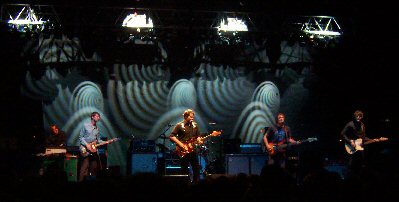
Photo by Tony Fahy
So who knows what "The Real Story of Neil Young's 1975 song 'Like A Hurricane?' " might be? If you've ever wondered about the song's origins, here's an informative essay by Robert Broadfoot over on https://www.facebook.com/groups/ny.unreleased.nyu/

LIKE A HURRICANE – THE 50TH ANNIVERSARY
November 29 sees the official 50th anniversary of ‘Like A Hurricane’, one of Neil’s most iconic songs.
The story of its creation has taken on near mythical proportions, starting with a drug-fueled night out with the boys with Neil scribbling the lyrics on a handy newspaper, followed by a sleepless night bent over his Stringman synthesizer “playin’ away like Beethoven” looking like a “fuckin’ maniac”. The backing track with Crazy Horse took shape almost accidentally and for several months it didn’t even have any vocals. And in between Neil underwent an operation on his vocal cords and couldn’t sing at all. It is certainly a fascinating story. However, in my view the ‘accepted’ dates for the writing and recording of the song are not correct. Everyone, including Neil himself, places the whole story after the throat operation in October 1975.
The evidence however suggests this is wrong.
It may not matter to many, but that whole period was such an important and wildly creative phase in Neil’s life. He emerges from the ‘ditch’, from the demands of his involvement with Crosby, Stills & Nash, and the shards of his tempestuous relationship with Carrie Snodgress, to rediscover himself and his music with a reformed and reenergised Crazy Horse. The summer of 1975 was a crucial period in which he created other major songs such as ‘Cortez The Killer’ and ‘Danger Bird’ and which saw the earliest known recordings of ‘Powderfinger’ and ‘Pocahontas’ for example. It seems important to get the chronology right.
‘Like A Hurricane’ was written during work on the album Zuma. Once finished, it became the standout anthem of the amazing series of Crazy Horse shows in 1976, when I first saw Neil and the band live. That is one reason why the song is so important to me and why I think it is important to set the record straight. In my article, The Real Story Of Like A Hurricane?, you can judge the evidence for yourself.
I hope you find it interesting.
https://drive.google.com/file/d/1j8Oa8vWbSg1GhI8UHizmcBW6FlS9bwap/view?usp=drive_link
Robert Broadfoot
Thanks again Robert for all the invaluable research! Definitely helps clear up a few of the myths and legends surrounding "Like A Hurricane". (Also, see Rare Photo: Neil Young - Hammersmith Odeon, March 1976.)
More of Robert and NYU research on Neil Young Archives: Answer to Answers #4 by Broadfoot/NYU.
Also, here are details on Robert's other Neil Young unreleased music research:
DOWNLOAD FILE @
#NYU - Neil Youngs Missing Recordings V4.0 (c) Robert Broadfoot 2021.pdf (right click to "Save As")
If you see any corrections or updates, please share a comment below.

Neil Young's Unreleased Songs:
The Unofficial Archive - UPDATE Version 7 (Abridged): 12 November 2019
And many, many eternal thanks to all the unsung researchers and their labors of love.
... gone but NEVER forgotten ...
photo by thrasher
Labels: @CrazyHorse4HoF, crazy horse, hurricane, neil young, song
by thrasher@PermaLink: 11/02/2025 11:36:00 AM
4 comments


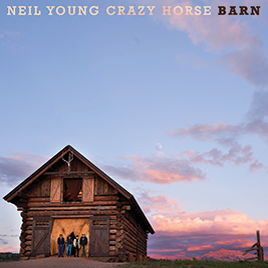

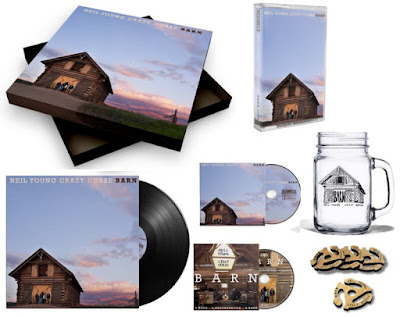


 >> Pre-Order on Amazon.com <<





 Human Highway


 Concert Review of the Moment


 This Land is My Land

 FREEDOM In A New Year


 *Thanks Neil!*


![[EFC Blue Ribbon - Free Speech Online]](http://www.thrasherswheat.org/gifs/free-speech.gif)


 The Unbearable Lightness of Being Neil Young
 Pardon My Heart


 "We're The Ones
  Thanks for Supporting Thrasher's Wheat!


 This blog
 (... he didn't kill himself either...)
#AaronDidntKillHimself
(... he didn't kill himself either...)
#AaronDidntKillHimself






 Neil Young's Moon Songs




 Civic Duty Is Not Terrorism
 Orwell (and Grandpa) Was Right


 What's So Funny About



I'm not certain this is the ideal place, but mobile app ate previous comments I tried to post on the Barn reactions thread, and I still have a few lingering feelings. As I write, the extended coda of No Hidden Path from CDII, reminding me more than ever of the "all one song" mantra. When I make comparisons or draw parallels between Barn and previous albums or songs, it doesn't mean that Barn can't stand on its own. Neither do I hear the songs being particularly derivative.
If anything, there are "family resemblances" between (for instance) SWA, CDII, and Barn (maybe Abner will dig this particular analogy). Less fancifully, it just means that NY and CH, like many artists, probably revisit and expand on older ideas to see if they can do it even better this time. And I enjoy hearing these echoes.
It may also help, when I relate one album to another, to talk about the precise qualities I'm detecting. Here I direct attention to Dan's previous comments on the track list sequencing of Barn. In my listening experience (which I like to think is not excessively narrow), no one sequences like Neil Young. Maybe it's the old Briggs influence, but even post-Briggs albums have a special way of weaving songs together, drawing out and exploiting the tension points, the push and pull between and within numbers.
Case in point: CDII. Who the hell sequences Ordinary People at the beginning, rather than the climax, of the album? Someone who has Shining Light, Spirit Road, The Way, and No Hidden Path up their sleeve. Colorado front loads She Showed Me Love--and I think it's a bold, fantastic choice.
What I'm really hearing, and trying in my own small way to articulate, are musical and spiritual threads that run throughout all these albums. It's not that Barn requires comparison. Rather, it warrants comparison by way of appreciating the scope of an going 50+ year body of work.
I must take just a moment to address CDII. I keep talking about it elliptically and it's time to spell this out, though I'm sure some will disagree with me. Ordinary People is a landmark--however, No Hidden Path makes the album. It's the foundation, the beating heart of CDII, and, I suggest, one of NY's most important songs post-Y2K. And many of the best moments don't even have words. Just Old Black sawing away, cleaving through the forest of Neil's (and our) dreams. When I listen to this track, I hear a grunge raga. Nowhere near as complex or disciplined as the Indian classical mode, but the rawness is what makes it grungy.
All of which is to say: 1) When I liken Barn to CDII, that's not a slight on either album. And 2)If you haven't listened to CDII in a while, considering giving it a fresh try. At over an hour long, it requires time and some patience but has been, and continues to be, one of NY's most cohesive, rewarding, and--in my view--deeply significant of Neil's newer albums.
If you've gotten this far with me, many thanks and happy 2022 to all! I look forward to NYA3 and--dare I say it?--perhaps even the long-awaited appearance of Toast in the coming months. Peace and cheers!
[ps, on ATTENTION TW COMMENTERS: Thanks and A Suggestion]
We were road-tripping over New Years, so my access to TW was especially spotty... however, I'm just happy that my previous comments have resonated with and inspired a handful of people, especially insofar as folks have actually gone back and listened with fresh perspective to some of the albums or songs we've been talking about.
Nothing's quite as rewarding as knowing someone is actually "hearing" you, even if they are light years away in cyber space.
Per my responses to my recent comments, yes, CDII and other such albums are colored deeply by contributions from Ben Keith, Rick "the bass player" Rosas, Pegi Young... a roll call of absent friends. Of the older songs on CDII, I find Bluebird the most sublime fit with the "new" ones. It sets up a nature/spirituality theme that culminates with No Hidden Path.
Ralph M, of course, contributed drums and backing vox to much of that aalbum. The somewhat unusual combo of Ralph and Rick is, to say the least, effective: have you heard the drum fills on No Hidden Path or the bass on Boxcar? The reason I keep returning to CDII is probably because Barn carries such strong echoes of it. Human Race (a real grower for me) turns the raw angst of Spirit Road up to 11. Don't Forget Love definitely comes from the same family of songs as The Way--ymmv on the absence of any children's choir. And the first time I heard Tumbling Through the Years, I was struck immediately by the arrangement: an almost perfect mirror of The Believer.
For me, the piano songs (Tumbling, Shape of You, Don't Forget) are some of the most pleasant surprises, and an important counterpoint to the heavier, more urgent moments of Barn. This kind of balance marks many of Neil's best (or should I say, many of my favorite?) albums. Song of the Seasons and Welcome Back, among others, will command repeated listening. It seems NY likes to start an album strong and, if possible, end even stronger.
"If heaven had a window where the sun came shining through, like a beautiful bluebird I'd come flying back to you."