Neil Young's new release ""World Record" w/ Crazy Horse is now available for pre-order. Order here (Please shop locally & independently. But if you can't, we appreciate your supporting Thrasher's Wheat by clicking this link
or YOUR COUNTRY's FLAG. Thank you!!!) ADVERTISEMENT
An unofficial news blog for Neil Young fans from Thrasher's Wheat with concert and album updates, reviews, analysis, and other Rock & Roll ramblings. Separating the wheat from the chaff since 1996.
Happy Valentine's Day to All of Our Hearts of Gold + Nathaniel Rateliff Joins Farm Aid Board
Nathaniel Rateliff @ Farm Aid 2025
Minneapolis, Minnesota - Sept. 20, 2025
photo by thrasher
(Click photo to enlarge)
Happy Valentine's Day! But first, some news ....
Nathaniel Rateliff has joined the Farm Aid Board of Directors.
Per the Farm Aid organization, after a unanimous vote, Rateliff will work alongside founders Willie Nelson, Neil Young and John Mellencamp, fellow artist board members Dave Matthews and Margo Price. Rateliff is the third artist to be added to Farm Aid’s Board since its original founding.
A statement by Nathaniel Rateliff:
“Farm Aid has made a huge impact on me.
It is always one of my favorite events of the year. It is an honor and a privilege to join my heroes and peers as a Farm Aid board member. I look forward to working together to continue educating the public on the struggles family farmers face and to raise money to support them for a better future.”
Congratulations Nathaniel.
And in the spirit of Farm Aid, here is Bob Dylan's full set at Farm Aid 40 in HD video.
Introduction by John Mellencamp 0:00
All Along The Watchtower 0:54
I Can Tell (Samuel Smith) 5:27
To Ramona 9:02
Highway 61 Revisited 13:20
Don't Think Twice, It's All Right 17:31
And last but not least, a Happy Valentine's Day to All of Our Hearts of Gold out there!
Appropriately, here is Neil Young with Crazy Horse with an animation video (by Micah Nelson) for the song "Don't Forget Love" from the 2022 album "Barn".
Neil Young & Crazy Horse - Don't Forget Love, Animated Version (Official Music Video)
It should be noted that the 2022 post on Neil Young’s Harvest at Age 50kicked off a healthy discussion amongst our resident commenters (now known as ‘Thrashers Wheat Sanity Collective’) over "romanticism in Neil's music". Check out those comments -- should you be a romantic.
and #DontForgetLove
ps - this belated comment is for all of our dear German readers.Hope you can pick up on what we're putting down ...
The song in question was a winsome acoustic travelogue by band member Dewey Bunnell, now titled A Horse With No Name.
By January 1972 it was at No.3 in the UK singles chart, while their
self-titled debut album was on its way to the upper reaches of the LP
listings. Within two months, both single and album were sitting atop the
US charts. America were the newest sensations on the block.
The breezy melody and sun-caked harmonies of A Horse With No Name typified
the group’s soft-rock sound. A nostalgic paean to a real or imagined
past, it was infused with the same turn-of-the-70s ecological spirit as Neil Young’s After The Gold Rush. Bunnell’s voice was eerily similar to Young’s, while America’s dreamy otherness owed much to Young’s sometimes-compadres Crosby, Stills & Nash.
So how exactly did the band go about fielding accusations that A Horse With No Name was little more than a Neil Young/CS&N rip-off?
“I
really felt like nothing was contrived,” answers Bunnell. “We weren’t
trying to be imitators. We were truly inspired by that music, just as we
had been before by The Beatles and The Beach Boys. We were reflections
of our generation and the whole hippie thing. And Neil was really a big
spokesperson for that.
“I didn’t expect some of the backlash after
its success. Had the song just died on the vine people would have been
more inclined to treat it differently. But then you get the Neil fans,
who were rabidly protective. And, of course, there’s the whole thing
about the timing, with us knocking Heart Of Gold off the top of the charts.
“It
was ironic that, after all this, we moved back to the US and were
managed by David Geffen and Elliot Roberts, whose crown jewels were
Crosby, Stills, Nash & Young. Even to this day, there are people who
think A Horse With No Name is a Neil Young song.”
It
didn’t help that promoters used the association glibly too. An
advertisement in Boston for America’s first US tour of 1972 stated,
somewhat maddeningly: ‘America, Horse With No Name – They’ll make your little Heart Of Gold rush.’
The band became even keener to prove they were no one-trick pony.
These incredible Grade 6,7 and 8 music students from Arbutus Global Middle School in Victoria BC live, learn and make music on the beautiful lands of the Songhees, Esquimalt and WSANEC peoples. We are thrilled to be participating in the CBC Music Class Challenge and share our
latest entry of Neil Young’s Heart of Gold.
Putting this arrangement together has been a labour of love. We hope you enjoy our video!
Neil Young & Romanticism in His Music: A Happy Valentine's Day to All of Our Hearts of Gold
"Don't Forget Love"
art by gary ward
Happy Valentine's Day!
Appropriately, Neil Young with Crazy Horse has released a 2nd versionof a video with animation for the song "Don't Forget Love" from the album "Barn".
Neil Young & Crazy Horse - Don't Forget Love, Animated Version (Official Music Video)
It's been roughly 45+ years now since Neil Young's immortal song "Heart
of Gold" entered our lives, and we'd like to wish that every day could
be Valentine's Day.
It should be noted that the post on Neil Young’s Harvest at Age 50kicked
off a healthy discussion amongst our resident commenters (now known as
‘Thrashers Wheat Sanity Collective’) over "romanticism in Neil's
music". Check out those comments -- should you be a romantic.
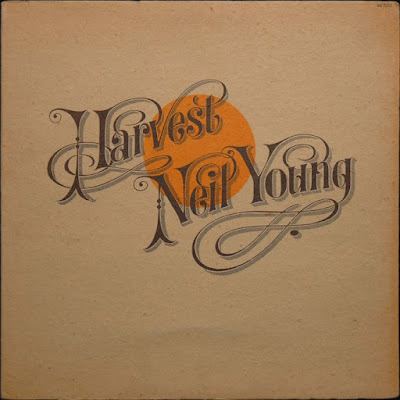
Harvest by Neil Young - Released on February 1, 1972
Regarding Neil Young and Romanticism -- and to a degree post-romanticism -- from a review of Neil Young's 1977 album American Stars 'N Bars by PAUL NELSON, originally published in Rolling Stone on Aug 11, 1977:
In the New York Times, John Rockwell, in a highly favorable review,
characterized Young as "the quintessential hippie-cowboy loner, a
hopeless romantic struggling to build bridges out from himself to women
and through them to cosmic archetypes of the past and of myth." Well,
no.
Unless one understands the "On the Beach"/"Motion Pictures"/"Ambulance
Blues" trilogy from On the Beach (and "Don't Be Denied" from Time Fades
Away), one simply cannot write intelligently about Neil Young. But when
one understands these songs, one begins to perceive the exciting
possibility that perhaps Young is rock & roll's first (and only?)
postromantic. That he knows something that we don't, but should. Indeed,
I suspect that Young took one of the longest journeys without maps on
record, never even slowed up at the point of no return, but somehow got
back anyway, a better man with all senses intact. When nearly
overwhelmed by marital difficulties and the death of friends, he
apparently looked into himself and managed an instinctive or willed act
of Jungian purification that put him somewhat safely on the far side of
paradise, if not paradox. I'm not saying he's happy, but who the hell is
happy? For Young, being a postromantic probably means he still loves
the war, but knows exactly how and where to invest his combat pay-he may
lose it, but never hopelessly.
Romanticism is a foreign country; they do things differently there. It's
a nice place to visit, but I wouldn't want to live there. Too
homicidal. Having gotten through the more self-destructive aspects of
romanticism, Neil Young certainly takes full advantage of his revisiting
privileges, pointing out the highlights and contradictions of his
itinerary to all who will listen.
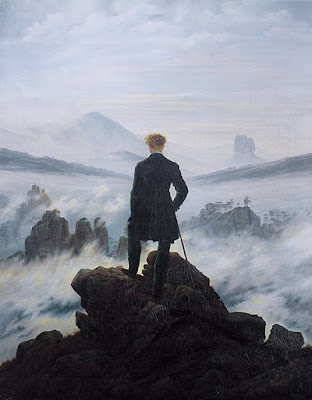
Last week, we celebrated Neil Young's album Harvest with an epic 50th anniversary posting by Harvey Kubernik. The comment thread on 50th anniversary of Harvest
yielded a staggering barn full of thoughts and musings on the
significance of love, romance and the impact of Neil Young's music,
which is visualized in the painting below.
Often, we've found ourselves trying to explain Neil Young's music to others with varying degrees of success. In the end, we find that his music isn't really something that can be explained.
While we've expended quite a few words on this blog making an attempt, it really is the stories of others which transcend the gap much better.
And no Neil Young song seems to say Happy Valentine's Day more than "Harvest Moon" it would seem by gauging the song's popularity as a "First Dance" song.
If one song sealed Neil Young’s transformation from counter-culture
stalwart to a new rock and roll poster boy, then it has to be ‘Heart of
Gold’.
Another brilliant song from the Harvest album, which could have
easily dominated this list, sees Young transcend rock and roll and turn
pop, if only for a short while.
Featuring backing vocals from none
other than James Taylor and Linda Ronstadt, the song shot Young into
stardom and was later despised by the songwriter. It’s a song that,
ironically, Bob Dylan saw as purposely copying him: “The only time it
bothered me that someone sounded like me was when I was living in
Phoenix, Arizona, in about ’72 and the big song at the time was ‘Heart
of Gold’,” he once commented.
From performance in 1971 on the BBC, here is Neil Young's song 'Heart of Gold' with his vocals isolated. Listen.
Today, the song "When God Made Me" from the concert film "Neil Young: Heart of Gold", directed by Jonathan Demme, is streaming on Hearse Theater | NYA.
The song's posting comes with a special comment by Neil Young's son Zeke:
I
love the performance of this song.
It has such feeling and soulfulness
to it. It is one of my favorites from the film Heart Of Gold that my Dad
made with all his great friends along with the great film maker and
director Jonathan Demme.
This is one of my favorites from this time of
my Dads life.
Love
Zeke
Back in 2006, movie reviews for the concert film "Neil Young: Heart of Gold" were
virtually unanimous in singing the film's praises.
A Very Happy Valentine's Day To Our Hearts of Gold: "We Miss & Love You All!"
Happy Valentine's Day!
It's been roughly 45+ years now since Neil Young's immortal song "Heart of Gold" entered our lives, and we'd like to wish that every day could be Valentine's Day.
And no Neil Young song seems to say Happy Valentine's Day more than "Harvest Moon" it would seem by gauging the song's popularity as a "First Dance" song.
Often, we've found ourselves trying to explain Neil Young's music to others with varying degrees of success. In the end, we find that his music isn't really something that can be explained.
While we've expended quite a few words on this blog making an attempt, it really is the stories of others which transcend the gap much better.
STREAMING THIS WEEKEND: "Neil Young: Heart of Gold" Film + Reviews
"Neil Young: Heart of Gold" Film
This weekend, the concert film "Neil Young: Heart of Gold", directed by Jonathan Demme, will be streaming on Hearse Theater | NYA.
Therefore, mining and metallurgy metaphors coming your way.
Movietone: Heart of Gold
Directed by Jonathan Demme
Honoring the great traditions of Nashville music at the Ryman Auditorium, home of The Grand Old Opry. Thanks to Jonathan Demme for making this picture.
Back in 2006, movie reviews for "Neil Young: Heart of Gold" were virtually unanimous in singing the film's praises -- and critics were nearly unanimous in using mining and metallurgy metaphor phrases like "glittering gold" and "strikes gold" in reviews.
Here's a sample of some of the reviews for the Jonathan Demme film of the 2005 Nashville Ryman concerts.
From New York Metro review "Young at Heart: Jonathan Demme syncs up perfectly with Neil Young" by David Edelstein:
"Among the achievements of Neil Young: Heart of Gold is that it triumphs over its exalted press notes, which describe it as "a groundbreaking union of film and music ministered by Jonathan Demme and Neil Young." Ministered, huh? I've always
preferred my country-rock with a grain of sulphur, but the Reverend Demme's track record with concert films (chiefly that celebration of transcendental alienation Stop Making Sense) is as good as anyone's, and the Reverend Young, bouncing back from a brain aneurysm, has certainly earned the right to take the long view. And by the time the director gets to Young and his musical family standing around tuning their instruments - it's right before an August 2005 Nashville performance of Young's latest album, Prairie Wind, at one of the former sites of the Grand Ole Opry - you get an inkling of the movie's fluid grace."
From MTV.com review "'Neil Young: Heart Of Gold': The Magic Of Music Made Visible" by Kurt Loder:
"'Heart of Gold' isn't quite like any other concert movie. There are no frantic edits, no showy montages, no swooping pans across a cheering audience. (In fact, the audience isn't even shown.) The picture was shot entirely with long-range lenses, which means there were no cameramen scurrying around the stage to distract the musicians. The performances move forward in long, serene takes, and the result is a film that focuses completely on the playing and singing. The musicians' empathic interaction is revelatory."
"Demme keeps the cameras right in front of the performers, and he avoids the stale rock-concert ecstasy of swooping and swivelling and shooting into the lights. Nothing in this movie is aggressively sold; nothing in it is intended to change your life. The attitude is "Take it or leave it -- this is what Neil Young is."
Ignoring the audience in the hall, Demme concentrates on the music and the lyrics and the relations between Young and members of the band -- sometimes just a nod, a smile, a raised eyebrow. Since the sound is unusually clear as well as full, one can actually hear the lyrics in all their mournful near poetry. One might call "Neil Young: Heart of Gold" soothing, even becalmed, but mellowness and ripeness, when they exist at this high level of craft, should have their season, too."
CBC.ca review "Forever Young - Jonathan Demme captures Neil Young at his best in Heart of Gold" by Stephen Cole:
"Elegantly lit and handsomely staged in the neo-classical country style Young intended — no haystacks or sequins! — this concert film has the burnished glow of a Vincente Minnelli MGM Technicolor musical from the 1950s. And no one seems happier to be transported back in time than Young, decked out in a pewter swallowtail coat and wide-brimmed gaucho hat, as he sidles up to prim and pretty cowgirl Emmylou Harris for an old-fashioned duet."
From New York Times review "A Weathered Rocker but Still Unbowed" By MANOHLA DARGIS:
"In 'Neil Young: Heart of Gold,' the colors shift from ocher to shades of blue as the mood shifts from plaintive to rueful. Every so often a scrim slides awkwardly into place behind the musicians and a painted train cutting across a prairie is replaced with an interior scene of a skinny cat, a fat chair and a fireplace. The show's simplicity and homespun vibe serve Mr. Young's emotionally tremulous songs, both the new and the old, wonderfully well. At one point, during one of his occasional verbal rambles, he says half-jokingly, half-defensively that he's got some love songs left in him. This film, which is at once a valentine from one artist to another and a valentine from a musician to his audience, is surely proof that he does."
From The Washington Post "Neil Young film becomes American family affair" by Bob Tourtellotte:
"Neil Young, iconoclastic troubadour for decades of counter-culture in the United States, has made the ultimate American family film.
It seems ironic, but it is true, says Jonathan Demme, who directed "Neil Young: Heart of Gold," which is now playing in U.S. theaters.
The term "family film" is associated with Disney and Pixar and huggable stuffed toys. Young's song "Needle and the Damage Done" speaks to heroin addiction, and he will forever be linked to 1960s and 1970s anti-war protests with songs like "Ohio" from Crosby, Stills, Nash & Young. And since then, the 60-year-old has only grown in stature to become a standard bearer for angst-ridden teen rockers.
Yet, in "Heart of Gold," the Canadian-born Young and Demme have created what they term a "dream concert" of songs from his recent "Prairie Wind" album and older "Harvest" and "Harvest Moon" records that conjure spirits of country-and-western music's past and harken to a simple life in the North American heartland.
"It puts me in touch with some deeply felt, old-fashioned, powerful ideas about what America stands for, what the family stands for, what friends stand for," Demme told Reuters in a joint interview with Young. "There's a complete absence of cynicism. I think it makes you feel good to be human."
From Newsday.com review "Being Neil Young: A Survivor's Song" BY JAN STUART:
"You don't have to be a Neil Young fan or contemporary to be deeply moved by the prescience of these songs or the affirming presence of his back-up singer wife, Pegi, his friend Emmylou Harris (who provides memorable assist on "This Old Guitar") and a graying fraternity of studio-musician pals from the year one. To see and hear "Neil Young: Heart of Gold" is like soaking in a warm tub filled to the brim with luxuriant, life-restoring music."
From LA Daily News "Forever Neil Young" by Fred Shuster:
"It was a very personal performance, like my club performances before I became well-known, before people developed preconceptions of who I am," Young, 60, said from his home near San Francisco. "The idea was based on the old folk tradition where you'd talk a little about a new song before you'd play it. Very much in the Woody Guthrie, Bob Dylan tradition - although Bob never talked that much - in the fact we were doing all new songs for an audience that had never heard them before. This was a crowd who knew what to expect - it wasn't a crowd yelling for 'Heart of Gold.' "
From Village Voice review "Long May He Run: At 60, a not-so-young Neil confronts death with elegiac hymns to family, friendship, and love" by Tom Charity:
"Plaintive and valedictory, Prairie Wind unfolds as a testament: Almost all the songs default to the first-person singular, and judging by Young's simple, straightforward intros, he means them to be understood as such. "Here for You" is dedicated to a daughter who has left home. "Far From Home" is about the right resting place, and "This Old Guitar" is a tribute to the instrument he "inherited" from Hank Williams and will pass on in turn one of these days. Mortality and remembrance are abiding themes; abiding is another."
"The first half consists of songs from Prairie Wind, the album Young recorded last year after a brain aneurysm threatened to call him out before he hit sixty.
Screw that. With a voice that still stands up to the country-rock throb he coaxes out of his guitar, Young lets his new songs of hard and high living on the Canadian plains bleed into the classics he wrote for Harvest and Harvest Moon. Demme is there to catch every note of bruising beauty. You don't just hear it in the music, you see it etched in Young's face. This is more than a movie, it's a privilege."
"The whole package draws you in and has you believing that you have the best seat in the house. The shots Demme captures are of intimate moments. Intimate moments between and among the musicians, their music and the audience. Knowing looks, smiles and nods among and between performers. That innate sign language between a leader and his band. Count it out Chad, enter now Keith, all finish. Almost indetectable inflections that the all together ensemble reads in near perfect harmony.
Oh, and since there might be a couple of people here who have some interest in Martin guitars, I suppose I should mention the Martins. Neil's 1941 'bone and his Longworth era D-45 are featured, as well as a new, (as it looked to me) D-28 (rosewood D with a black pickguard), that Pegi Young played for a couple of tunes. Of course, Neil mentioned that the 'bone once belonged to Hank Williams and that this was likely the first performance the Ryman had seen of this guitar since Hank Williams, Sr. last performed there. BTW, also on stage playing guitar was Grant Boatright, the gent responsible for introducing Neil to Tut Taylor and "Hank" back in the early 70's."
From Chromewaves "I've Been A Miner For A Heart Of Gold", Frank blogs:
"There's a real serenity and vulnerability about Neil in these performances, in both the songs and the somewhat surprising openness of the between-song dialogue - it's a real celebration of his life, his family and friends. The first half of the film is all new material, but later on he gets into some classic acoustic material which sounds so good, it might well bring a tear to your eye.
On the visual front, the film is appropriately understated, using slow cuts and tight close-ups on the performers in conjunction with simple but warm stage and costume design to create an intimate, elegiac and down-home atmosphere perfectly suited to the mood and setting of the Grand Ole Opry. Most past tour films featuring Neil have concentrated on trying to capture the chaos of his electrified Crazy Horse material, and justifiably so - the Horse in action is something to behold. But Demme shows that Neil Young the folksinger is just as electrifying on the screen as the ragged rocker, though in a completely different way. This is a very special film, not just for the quality of the music but for capturing a brilliant artist at a very key point in his life and his career. Definitely worth seeing for any Neil fan, and stay for the closing credits - they're mesmerizing."
From Chicago Tribune review "For Young and Demme, `Heart' a dream project" by Mark Caro:
"To make a "Prairie Wind" movie, Young said he and Demme batted around several ideas, including a plan to "film all kinds of things in Canada and find old stock footage and go back to the Indians." But, he added, "we elected to just let the music speak."
"There's so much dream imagery and dream themes throughout so many of the songs," Demme added. "At a certain point, I think we were joking, it was like, `Hey, let's make it a dream concert!' The great part is it's Neil Young's dream. Nothing will go wrong. It'll be the perfect musicians. It'll be the perfect venue.'"
Young said, "Let's make a movie that looks like a dream concert that is something that, if I closed my eyes and thought of the best way I could see to do a concert at that time, that would be it."
So Young lined up his band from "Prairie Wind" -- a collection of veteran rock, country and soul players who have backed him in the past, including keyboardist Spooner Oldham, steel guitarist Ben Keith and the Memphis Horns -- and booked the historic, acoustically pristine Ryman for two August performances. Meanwhile, Young and Demme conceived of the concert in cinematic terms.
Young's ambition to make unified albums meant to be heard (or seen) in their entirety can be interpreted as yet another against-the-grain move by this maverick musician. This is the iPod age, after all, when songs are sold individually and scrambled according to the listener's whims.
But when you watch "Heart of Gold," you have to go on Young's emotional journey as he designed it.
"It forces it to be an album," Young said. "You go to the film, you have no choice.
"You can't shuffle `Heart of Gold.' You can't shuffle that sucker. You can't take it with you -- at this point, anyway." "
"Demme proclaims himself 'perfectly happy' with Heart of Gold.
'In fact, I think I'm more happy with it than anything I've ever done,' he says. 'My whole position was that if Neil Young is actually going to agree to let me film him performing, then I want him to love this movie, and reflect what he cares about... . I didn't want to impose my thing. I wanted to memorialize his thing.'"
I saw the film at the Paramount Screening Room and the sound was incredible. If this film sneaks into a multiplex in addition to the art-house theaters, see it at theater with better sound. The Ryman Auditorium in Nashville was the original home of the Grand Ole Opry, and the acoustics are incredible. The sound in this movie is like another Neil… a Diamond. It’s gorgeous. You can even hear maracas shaking, and honestly, who doesn’t like maracas? Granted at 103 minutes, I think the film runs a song or two too long. By the end of it, Neil Young has kind of worn out his welcome, but then again, I’d much rather pay for 10 bucks for 103 minutes of Neil Young than 50 bucks (probably) for a 75-minute Weezer concert, which trust me, is generous for them. The one big question about this film is, why do we need it? Why now? Why Prairie Wind? At a concert, you’re with your buddies, you’re under an influence or two (hopefully), and you can talk, which you can’t do at a movie. I admit to looking at my watch several times and I noticed a few other critics doing it too. As a theatrical experience, it drags a bit, especially if you don’t like one of his songs. However my roommate Anders Hester, lead singer of The Alright Ma’s, went to the screening with me and being a huge Neil Young fan and having gone to several shows, said it was the most vulnerable he’d ever seen Neil Young, who in his opinion, plays one of his best shows. Obviously, there will be differences of opinion depending on your allegiance to Neil Young.
If you’re still on the fence about seeing this movie and you’re a guy, I’ll recommend it because of one musician I haven’t mentioned yet. Emmylou Harris. This woman is stunning. Incredibly beautiful. I have no idea how old she is and out of respect, I won’t look it up on the Internet for this review. I have a newfound appreciation for this woman. I didn’t even realize she’s won 11 Grammys. A bunch of other cool guitar, harp, and broom (yes broom) players join her and Neil Young onstage. It all amounts to something special, but whether or not that magic translates to the screen well is up for debate. To each his own my mother would say, and after all, music is deeply personal. I’m not going to ruin the set list but it will please fans and semi-fans to know that he does play “Old Man,” saying that he wrote the song about a guy he bought a home from. But Heart of Gold is made up primarily of his latest album Prairie Wind (not the song, which is one of the least good in the film), the album that many consider one of the artist’s bests. To be honest the film did spike my interest and make me want to hear more, just like Walk the Line made me want to listen to Johnny Cash more. Speaking of, if someone ever has to play Neil Young in a film, I nominate Tom Wilkinson. The likeness is uncanny.
The bottom line is that to see an artist like Neil Young do what he does best, the movie is definitely worth 10 bucks. You’d pay that to hear a shitty cover band at a frat party. So ultimately, this film is critic proof, because who hates Neil Young? Who is going to pan a 2-night performance when Neil Young was scheduled to have brain surgery less than a week later? Think he had a lot on his mind? Music is the man’s sweet release, so show him a little respect and see Neil Young: Heart of Gold if you get a chance.
New Jersey native Ellen Kuras, who said she listens to Young's music every day, filmed the concert portion of the movie in Super 16mm using nine cameras. The goal, according to Demme and Kuras, was to create the "dream state" evoked by many of Young's lyrics.
Before singing the title track to "Prairie Wind," Young tells the story of how his "daddy" suffered from dementia in the last part of his life.
"I know some of you know what that's like," he said. "It's something to see your loved ones living in the moment."Then he launches into the title track, singing, "Prairie wind blowing through my head/Trying to remember what my daddy said/Before too much time took away his head."
Later, Young explains how he wrote the song "Here for You" for his 21-year-old daughter, Amber, now out of the house and in her final year of college.
"There was a time I used to write songs like this for girls my own age," Young cracked, smiling toward Pegi. "It's a new genre, the 'Empty Nester,' and they might have their own radio station for 'em."
"When your summer days come tumbling down," the song goes, "and you find yourself alone/Then you can come back and be with me/Just close your eyes and I'll be there."
Prior to singing "This Old Guitar," Young explains how the guitar he is using for the concert used to belong to legendary country singer Hank Williams, who might have used it in his final appearance at the Ryman in 1951.
"The more I play it, the better it sounds," the song goes. "It cries when I leave it alone."
After completing the songs from "Prairie Wind," Young returns to his roots on "I Am A Child," "Harvest Moon" and "Heart of Gold," the first lines of which seem to have new meaning given what Young has recently gone through:
"I want to live, I want to give. I've been a miner for a heart of gold."
He wraps up the set with "Old Man," "The Needle and the Damage Done," "Old King," "Comes A Time," "Four Strong Winds" and "One of These Days."
Demme realized that another song would be needed when the film credits roll, and so he approached Young about that possibility. After saying he would think about it, Young agreed.
The result is a beautiful solo version of "The Old Laughing Lady" that Young plays on guitar while seated in a chair before an empty auditorium as the film ends. When he completes the song, the old singer puts on his hat, packs up his guitar in an old case and slowly walks off the stage.
Demme, who sat in the corner of the Ryman watching the performance, said the moment was appropriate because Young told him that after a concert, he likes to go out and look at the empty house.
"So he was essentially doing what he always does," Demme said. "And I had no idea he was going to do it."






 >> Pre-Order on Amazon.com <<





 Human Highway


 Concert Review of the Moment


 This Land is My Land

 FREEDOM In A New Year


 *Thanks Neil!*


![[EFC Blue Ribbon - Free Speech Online]](http://www.thrasherswheat.org/gifs/free-speech.gif)


 The Unbearable Lightness of Being Neil Young
 Pardon My Heart


 "We're The Ones
  Thanks for Supporting Thrasher's Wheat!


 This blog
 (... he didn't kill himself either...)
#AaronDidntKillHimself
(... he didn't kill himself either...)
#AaronDidntKillHimself






 Neil Young's Moon Songs




 Civic Duty Is Not Terrorism
 Orwell (and Grandpa) Was Right


 What's So Funny About