canada.gif

gb.gif

de.gif

us.gif
Neil Young's new release ""World Record" w/ Crazy Horse is now available for pre-order. Order here
(Please shop locally & independently. But if you can't, we appreciate your supporting Thrasher's Wheat by clicking this link or YOUR COUNTRY's FLAG. Thank you!!!)
ADVERTISEMENT
<-Older Posts Blog Home

Wednesday, September 04, 2024

New Neil Young Songs from the 1986 Buffalo Springfield Reunion Uncovered

 
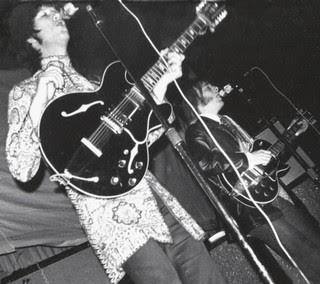
Buffalo Springfield - Third Eye, Oct 1966
(Click photo to enlarge)


Here's some news that new Neil songs from the 1986 Buffalo Springfield reunion have been uncovered. 
Robert Broadfoot from the Neil Young Unreleased Facebook group writes: 
I have been lucky enough to have had the opportunity to listen to some previously unknown recordings from the 1986 Buffalo Springfield reunion sessions at Stephen Stills’ house. Most will already know the recordings of Neil’s Road Of Plenty and Stills’ Unconditional Blues from the videos on YouTube. What many don't know is that the band worked on no less than 5 more songs including a great version of Neil’s Don’t Take Your Love Away From Me, and a completely new never-heard-before song of Neil’s (but possibly a co-write) called I’m A Fugitive. 
Not only is it interesting to hear the Springfield working on two more Neil songs, but the recording and the number of songs involved suggest that the reunion, although very short lived, was never meant to be a mere jam session with the boys. It was presumably part of embryonic plans for something much more substantial. A tour? An album? Sadly nothing came of it. In this fairly lengthy article, I look in detail at the songs the band was working on, including the lyrics to I'm A Fugitive. I have already written to Neil to try to find out more about this song. 
Here is a link to a download of the complete article:
https://drive.google.com/file/d/1X4B9mjhZDD3A0lA88BMecA7YLYQes18g/view?usp=drive_link 
More on Revisiting The Significance of The Buffalo Springfield Reunion. 

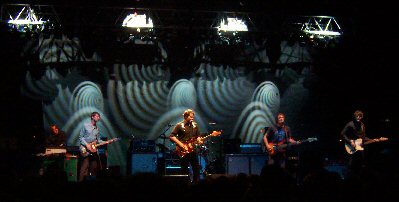
Buffalo Springfield - 10/23/10
Photo gallery by Nan Philpot | Facebook
 

Also, see Neil Young's Unreleased Songs: The Unofficial Archive - UPDATE Version 7 (Abridged): 12 November 2019


Neil Young's Unreleased Songs:
The Unofficial Archive - UPDATE Version 7 (Abridged): 12 November 2019


Also, see Neil Young Archives: Answer to Answers #4 by NYU. 

Also, see Neil Young's Unreleased Songs: UNCLE EDDIE'S CUPBOARD + The Unofficial Archive - UPDATE Vers. 7 + COTM.

Also, see Neil Young's Missing Recordings | NYU.

Labels: ,


<-Older Posts Blog Home

Tuesday, May 30, 2023

INTERVIEW: Rick Rosas on Buffalo Springfield and the East Los Angeles Music Scene

Neil Young, Chad Cromwell & Rick Rosas 
Bridge School Concert - 21 October 2006
  (Click photo to enlarge)
 

Here is an interview with Rick Rosas in ~2014 excerpted from UNO MUNDO (It Came From East Los Angeles) by Harvey Kubernik.

Many years before bass player Rick Rosas joined Neil Young, Rick was in the reformed Buffalo Springfield, and a tour with CSN&Y, Rosas reflects on the vibrant music birthed in East Los Angeles.


Rick Rosas: Back then, people didn’t look at a racial or geographical divide between East L.A. and West L.A. See, people didn’t look at your color back in those days. I remember being in Garfield High School, and [there were] maybe three or four black guys in the school, and you treated them like brothers. They were all very good friends of mine.

Eddie Davis and Billy Cardenas were very important. They would release stuff on their little private labels, like Rampart, and it would get picked up by a major label because it was making noise in L.A., not just East L.A. Then it became national, like Cannibal & the Headhunters’ “Land of a Thousand Dances.” Cannibal & the Headhunters and the Blendells were very good. They were mentors, also. We opened up a lot of shows for them, and they showed us the ropes. We listened to all the same radio stations. Even KHJ played our first single on GNP Crescendo.

And there was always Thee Midniters. The records did them justice. Little Willie G, oh man, he was an entertainer. I looked up to him very much. And the bass player, Jimmy Espinosa, I took lessons from him. He taught me how to read. Thee Midniters were big mentors to Mark & the Escorts at the time. Cannibal & the Headhunters and the Blendells were very good. They were mentors, also. We opened up a lot of shows for them and they showed us the ropes.

AM radio initially connected everyone together and then FM radio changed the world a lot back then. The sound was so much better. And, DJ’s like B Mitchel Reed would play the extra-long version of Buffalo Springfield’s “Bluebird.” It was like 18 minutes. Nobody would do that on the radio. “Where did Mitch get that?” That could only happen in L.A. I loved the Beach Boys. Even before Mark and I were invited into their “All Summer Long” recording session.

And when I heard the first Mothers of Invention album Freak Out! I then freaked out. Great. “Help I’m a Rock.” I had no idea until later that Zappa loved doo wop and worshipped East L.A. It didn’t dawn on me his link to East L.A. He had a song “St. Alfonzo’s Pancake Breakfast” on his solo LP Apostrophe (‘) although the spelling of the church is St Alphonsus Catholic Church. I went to with my parents. That hall had teen dances. I saw Thee Midniters and the Mixtures, another great band. Black and white. That was the first time I saw an electric bass on stage. “I gotta get a Fender bass.” I got one at Phillips Music Store in Boyle Heights on Brooklyn Avenue. I still have the bass, a ’64 Jazz bass. My mom bought it for me. I still have the receipt.

Buffalo Springfield had a big impact on me. From their first record they just caught my ear. I just loved the guitar playing and the singing. It was like the California Beatles. They were just so good. I heard “For What It’s Worth” the first time driving around in East L.A. We’d end up in Hollywood every once in a while, cruising the Sunset Strip. Past Pandora’s Box, where Stephen wrote about it.

I think at the beginning of Buffalo Springfield, Stephen Stills stuck out the most. His voice was recognizable. And then as it went on, Neil’s voice slowly slipped in. He didn’t sing much on the first album. And when he did sing, he was so unique. It wasn’t perfect but it was great. And Buffalo Springfield had Richie Furay.

And when Mark (Guerrero) and I noticed that their first album was recorded at Gold Star studios in Hollywood, we needed to record there as well. We were kids. I could not believe we were at Gold Star. It made a big impact on us. Anything they did we had to go and try and find it. Then, Buffalo Springfield Again came out and I had my mind blown. To this day, that whole album is amazing.

We went to the Springfield goodbye concert in Long Beach. It was pretty heavy. I was so young. It was really good. Some of the guitars were out of tune. Then they came out with Last Time Around. Definitely blew my mind. That thing holds up to this day. I love that album. “Pretty Girl Why.” “Uno Mundo.”

Then I heard the first Neil Young solo album. My favorite of his. I have worn out two or three copies on vinyl. Neil with Jack Nitzsche.

Then six months later, Neil and Crazy Horse, Everybody Knows This Is Nowhere. A whole other direction. Mark Guerrero and I went to The Troubadour all the time. Saw the debut of Neil and Crazy Horse. Fantastic. He started out acoustic. I think he did “Sugar Mountain.” And then they rocked for an hour. They sounded great. Of course, we went to the Greek Theater to see the first Crosby, Stills & Nash show. Neil was now in the group. We paid, but may have snuck in one other night. That first album kicked me in the ass. And Déjà Vu which was another one that blew me away. I just fell in love with it immediately. Songs like Neil’s “Country Girl.” And I was always a big fan of the Byrds.

Many years go by and I end up playing with Neil in his Blue Notes group. “This Bud’s For You.” I did play with Neil at a little Mexican restaurant nightclub in Montebello on Garfield Avenue. We went down there one night because the sax player, Steve Lawrence, used to play there. “Let’s play a little club.” “Hey let’s do it!” We were at SIR. Next thing I know. We grabbed a few amps and went down there. Set up and played. It was hilarious. Neil later did a version of “Farmer John” on a Crazy Horse album.

I subsequently played with Neil on his solo albums and tours. And then Crosby, Stills, Nash & Young.

Neil’s tours had Buffalo Springfield tunes but this was Buffalo Springfield. And the front line of Neil, Stephen and Ritchie. All during my tours and recording with Neil, he and I would talk about Buffalo Springfield. I never hid my excitement about Buffalo Springfield and loved to talk to him about that band, sometimes over a couple of glasses of wine. He embraced the band. He loved it. Neil would talk about it as much as he could remember. He drove around in one of his first tour buses with the Buffalo Springfield logo on the back.

I was already a graduate of Neil Young University. That gave me a tremendous amount of confidence to take on this job. Dewey Martin and Bruce Palmer were definitely part of the original sound. I did my best to try and emulate Bruce to the best of my ability. I tried to play some of the parts because they worked so well. The shows were magic. And Neil used some vintage Buffalo Springfield gear. A couple of his guitars.

© Harvey Kubernik, 2023


Also, see INTERVIEW: Rick Rosas in 2006 -  “I Just Wanted To Walk With Them”


Tom Bray, Chad Cromwell, Rick, Paul
 

Labels: , ,


<-Older Posts Blog Home

Wednesday, January 18, 2023

VIDEO: Buffalo Springfield Scene on Mannix TV Episode - 1967

Buffalo Springfield Scene on Mannix TV Episode - 1967

Recently, Neil Young talked to Conan O’Brien about his best and worst TV appearances.

Neil was pretty definitive that The Johnny Cash Show in 1971 was his worst because of his nervousness. OTOH, Neil considered Buffalo Springfield on Mannix in 1967 to be one his best. 

Here's a scene from the Mannix TV episode aired on October 28, 1967 with Buffalo Springfield.


The Mannix TV episode is titled "Warning: Live Blueberries" features Buffalo Springfield in a nightclub performing Stephen Stills song "Bluebird".

Definitely has that '60's feel with Sunset Strip's Whisky Go-Go vibe. 

In an interview with Rolling Stone, Stephen Stills was asked if he ever regrets not taping some of their concerts, he mentions this Mannix episode:  

"Yeah. The best sound we ever got was when we did this stupid TV show [Mannix, Oct 1967] where we played just a little bit of a song and we were like, 'Oh, my God, that's the sound we've been looking for'.

It was the only place we could get that sound right."
More on Neil Young Talks to Conan O’Brien About His Best, Worst TV Appearances.


Labels: , ,


<-Older Posts Blog Home

Thursday, December 08, 2022

Buffalo Springfield Debut LP Released December 1966

Buffalo Springfield Debut LP 
Released December 1966 
 (Click photo to enlarge)
 

Here is a comprehensive, in-depth look back at  Buffalo Springfield's debut album, released in December 1966, by Harvey Kubernik.
 
Harvey Kubernik is the author of 19 books, including "Neil Young - Heart of Gold" (see TW review). We interviewed author Kubernik while Thrasher's Wheat celebrated Neil Young's 70th birthday back in 2015. 
 
In 1966 and ’67 Harvey Kubernik saw Buffalo Springfield in two of their Southern California concerts and attended debut Neil Young solo concerts in the region. 
 
Thrasher's Wheat just recently published several highly popular articles by Harvey Kubernik:
 Thanks Harvey! enjoy.

Buffalo Springfield Debut LP Released December 1966
By Harvey Kubernik, Copyright


Buffalo Springfield - Third Eye, Oct 1966


     In December 1966 I purchased a mono copy of Buffalo Springfield in Hollywood at Wallachs Music City on Sunset and Vine.  I witnessed Buffalo Springfield. Twice. In December 1966 with my brother Kenny at the Santa Monica Civic Auditorium, and in April 1967 inside the Hollywood Bowl.  

   It was in the spring 1966, when Neil Young and Bruce Palmer hit the road, blazing behind the wheel of a 1953 Pontiac hearse, natch. Finally, in early April ‘66 they arrived in Los Angeles, in search of Stephen Stills and musical dreams held desperately dear.

   Coincidentally, Stills had been anxious for Neil to join him as well. Richie Furay, another gypsy, was back with Stills, the promise of a band his inducement to come west.

   Where was Neil? Having given up their search for the mercurial Stills, Neil and Bruce decided to head to San Francisco and what sounded like a promising music scene.

   In one of the most fortuitous encounters in the history of pop music on that April afternoon on Sunset Boulevard which saw our two protagonists come to a traffic stop at the exact same moment—one going east and the other going west. But, good heavens, who else but Neil would be driving a hearse with Canadian license plates in Los Angeles? And thus, one of the enduring creation myths was born.

   Los Angeles, the city of noir, city of night, and city of light. For all its enticing charms—the vaguely toxic vermillion sky, the lustrous undertow of the adjacent Pacific—it could induce a palpable ambivalence. 

   By 1966, the city was undergoing a vivid reimaging, like a film set readying itself for its next call to “action.” The Watts riots of August 1965 had slapped the dreamy denizens into social/political consciousness, the smog-shrouded basin taking on an acrid, burnt-brown hue.  

 Buffalo Springfield @ Hollywood Bowl on April 29, 1967
Photo  by Henry Diltz.

 
   There was, indeed, something definitely happenin’ here, something best documented in melodies and words of young troubadours who found in pop music the ideal platform to address all those roiling, inchoate concerns. Los Angeles was the epicenter of this sonic youth-quake. The strum of a D minor chord, the hurt in an orphaned voice, a transformative backbeat, a pulsing bass line, the sting of a lead guitar, this was the recipe for rebellion with a bullet, turning protest into publishing.

   In my 2016 book, Neil Young: Heart of Gold, I spoke with Dickie Davis, omnipresent Buffalo Springfield advocate, road manager turned guiding force, about his essential contributions to the band.   


Stephen Stills @ Gold Star Recording Studio 1966

photo by Henry Diltz


   “I met Stephen Stills when he was in the Au Go Go Singers in Houston. In 1966 I was now working at Doug Weston’s Troubadour in Hollywood selling tickets and running the Hoot nights. Neil Young and Bruce Palmer come into town and I hear about it. Stephen and Richie connect with a drummer, Billy Mundi. They were good. I’m watching Steve, Richie, Bruce, with Billy Mundi, and at this point their manager Barry Friedman asked me to help out with the band. Sort of like a road manager thing. Dewey Martin joined as drummer replacing Billy.

   “Returning from the Troubadour, in my faded red 1963 Volvo P1800, Richie and I pulled to the curb on Fountain Avenue outside Barry Friedman’s place. I stopped immediately behind a steam roller and noticed a small metal sign hanging loosely from it.

  “How about that?” I said. ‘I’ve heard of Mercedes-Benz, and Alfa Romeo, but there’s a Buffalo Springfield. Never heard of that one before.’

     “Everyone laughed and got out of the car. We proceeded to try to get the sign off the roller. It was hanging from only one bolt but it wouldn’t come loose. As they went inside, I drove away. Later, possibly the next day, I was at Barry’s. Stephen showed me the sign and said he’d decided that it was the name of the group. I liked the idea. It had a contemporary, sort of Jefferson Airplane ring.” 
          In my 2009 book, Canyon of Dreams The Magic and the Music of Laurel Canyon, Laurel Canyon resident, the multi-instrumentalist Van Dyke Parks, who was on the scene at a 1966 Buffalo Springfield practice on Fountain Avenue, emphasized his role suggesting naming rights of the band who never became a brand.

“I said, ‘This is the name of your group. Come out here and look.’ The boys were having an argument and I was so bored I went outside to have a smoke and I saw the grader (road-building tractor) that was in front of Stephen Stills’ rented apartment on Fountain Avenue. The street was being widened, and there was a sign on the grader. It said ‘Buffalo Springfield.’ I pointed it out to them. ‘This is it.’ That was no problem. And of course, they forgot because they were blinded by their own ambitions. They had no idea I came up with that.”  

Dickie Davis

 
Dickie Davis: In later years I heard many times that Van Dyke Parks was crediting himself with thinking of the name. He even said as much to me recently. I was politely skeptical — and silent — until I realized that I had no idea what happened between the time Richie went inside and Stephen’s showing me the sign. He (Stephen) could well have been inside Barry’s at the time they managed to remove the sign and would have been as unaware of my presence as I was of his. It’s just conjecture, but it’s an explanation. (Stephen) never mentioned Van Dyke Parks.
   I liked the idea. It had a contemporary, sorta Jefferson Airplanish sound with strong All American/western implication. And, as they say, the rest is history — the kind that’s written.”
    Rehearsals with the Buffalo Springfield and Neil Young. My first impression. Neil seemed shy. He seemed anxious to please and he seemed like he really knew how to play guitar. He played maybe a very Chet Atkins country style rock ’n’ roll but if asked he could adapt his playing. If someone said, ‘Give a surf run, Neil,’ he would do it like the Ventures. Nothing to it.
     We’d all hang out at Canter’s Delicatessen on Fairfax Avenue after the Whisky a Go Go shows and Ollie Hammond’s on La Cienega.

    There was magic at the rehearsals. I was immediately sold. Barry Friedman had seen it grow. I helped it happen at the first gig at the Troubadour. It took so long to set the amplifiers up the audience had lost interest. And it took them a while to get the audience back. But they did. There was a good reaction.”  

Richie Furay @ Gold Star Recording Studio 1966
photo by Henry Diltz


Richie Furay: Everything happened so fast. We were young. We were new. When we did a six-week house band stint at The Whisky we thought we had no competition. It’s pretty incredible, isn’t it? Five young guys who brought five different elements together. When we put out stuff together, it was like ‘here’s what I want to contribute to your song, Stephen and Neil.’  We took elements of folk, blues, and country and we established our own sound.

   It was the Byrds’ Chris Hillman who got Buffalo Springfield their first Whisky A Go Go booking, which secured a future residency at the venue during May-June 1966.   


Buffalo Springfield @ Gold Star Recording Studio 1966 
photo by Henry Diltz 
 
Read more »

Labels: , , , , ,


<-Older Posts Blog Home

Sunday, October 02, 2022

Stevie Nicks Cover of Buffalo Springfield’s "For What It's Worth" + Essay by Harvey Kubernik


Stevie Nicks has released her take on Buffalo Springfield’s timeless protest song “For What It’s Worth”.


Stevie Nicks - For What It's Worth (Official Audio)

From Harvey Kubernik:
"Stevie Nicks just released her version of 'For What It's Worth.' When I saw Buffalo Springfield debut this tune in December '66 at the Santa Monica Civic Auditorium I didn't see this coming!  

I had these interviews in my archive that I conducted and own that might work online about this epic tune. Portions appeared in my 2015 book 'Neil Young Heart of Gold,' currently published in 6 foreign language editions."   

Stan Ross: (Engineer) On ‘For What It’s Worth’ it was a sound that I had worked on at our Gold Star recording studio. Buffalo Springfield did their first LP at our studio. They called me late at night to go up to Columbia studio and help fix the song. I was in Gold Star with engineer Tom May working with Sonny Bono on a song, ‘Sunset Symphony.’ Charlie Greene and Brian Stone called and said Buffalo Springfield had wanted to cut that night too, but the studio wasn’t available. I then received a call at 11:30 that night. ‘We’re in trouble.  We’re sitting here and nothing is happening.’  Tom May and I went over to Columbia. The kids were on the floor, and having a good time. I have two hours and I have to get some sleep for a session tomorrow morning.

    “I left at 2:00 A.M. after telling them  ‘all you got to do is put the vocals here and put some guitar fills in.’ We didn’t have 8-track when Buffalo Springfield came in, that’s why they went to Columbia ‘cause they had a 8 track machine.

   “I heard the song and had a great idea for the drum rhythm. I thought the drummer shouldn’t use his foot, and wanted someone to use a hand mallet. We have eight tracks here, and I want to be able to put the kick drum on track boom ‘Boom boom.’ boom boom.  And I wanted to take the guitar and wrap some paper around the frets and I wanted a back beat. Not using the drum but using the back beat of the frets of the guitar. That’s a sound and technique I worked on at Gold Star many years ago. A very crispy wonderful sound. So we put together the rhythm sound, basically. After we got the track sounding like a track at 2:00 a.m. I said, ‘look guys, all you got to do is get the vocals around here and put some fills in between the vocals.’ 

     “The next morning I got a phone call from (Atlantic Records) Ahmet Ertegun. ‘I got the record. The guy did a job in the studio, and I want you and Phil Spector to listen to two mixes. And I want you and Phil to tell me which mix you like.’ So Phil came down to Gold Star. CBS sent over mix one and mix two. And Phil and I listened, looked at each other and agreed, and that’s the record that came out.”

Dickie Davis: (BS Road Manager) I remember, maybe after Gold Star, going to Columbia. They laid down the tracks. Stephen sang the vocals, there were some background vocals worked out, Neil’s contribution of the harmonics, were done by plugging straight into the board in the studio. The clarity of those notes have to do with there’s not an amplifier and a microphone involved. It wasn’t almost a technical decision. It was kind of like Neil’s gonna sit in the booth and do this.

     You know. It might have been that simple. I loved the playback. It was a well recorded tune.

    Now, it wasn’t a ‘Beatles-style’ dance tune. Which was what we thought we had to do to be successful. It was a protest song and Stephen, the minute that song was a success. He started complaining, ‘Everybody is gonna think we’re a two bit protest band!’ And I would say things to him like, ‘Stephen, you wrote the song,’ you know. ‘It’s a success. It’s a hit!’

Kirk Silsbee (Writer): I don't know who arranged 'For What It’s Worth' but the pacing was brilliant.  I think Dewey Martin has a great role on that particular record, and Bruce is also playing pretty minimal stuff.  Of course, we know they could both play far more.  It’s just a stark well-paced lament. Think about it this way: this is a hit record that went top ten. That’s pretty remarkable in itself. It was a hit record that had a very long shelf life and is still being played, discussed and sampled many years later. But in the middle of Hit Record Land, where everything had to be moving and they wanted bright colors and bright sounds in the music, this is a dead slow serious lament.  It’s contrary to everything around it.”

Dickie Davis: ‘Clancy’ sinks and drowns and the Buffalo is stunned. Greene and Stone thought we’re gonna release an album and have the next Beatles. Everybody is gonna be wealthy. ‘Clancy’ was poorly recorded. By the way, there were background vocals that never got put on because there was no room on the tracks. A poor job of recording and not a success. We were broke. We didn’t have a dime.”

Brian Stone:
We were friends with Ron Jacobs, the program director at KHJ. Part of the RKO radio chain that changed formats in the spring of 1965. In April of 1966, Sonny & Cher, along with Bob Lind, who we managed. Were part of a KHJ benefit concert at the Hollywood Bowl. In July of 1966, Buffalo Springfield opened for the Rolling Stones at the Hollywood Bowl. KHJ was very involved but the booking was probably through William Morris.

      “The problem with Buffalo was that clash between Stephen and Neil. Having these two dynamic, talented incredible mighty playing forces like this, Ahmet (Ertegun) used to say to me all the time, we had hit records with him at Atlantic with Sonny & Cher, ‘I Got You Babe,’ and that ‘next to the Beatles, Buffalo Springfield were the best American rock group ever of all time.’ It was very rare to have two, if you want to include Richie Furay as well, three extraordinary singers, players in the same group.

     “We got Neil Young his first Gretsch guitar. But I think we got that and a lot of equipment for Buffalo Springfield from Wallichs Music City in Hollywood. As managers we did things for our groups. That was from management and not the recording part.  They would give us equipment and we would promote them. We would get a lot of instruments from them. Some of them we would have to buy. The guys would freak out and be happy."

Rodney Bingnheimer was a music reporter for Go magazine and worked record promotions for Nik Venet, based at Capitol Records. Rodney was a Gold Star regular and invited guest attending countless Charlie Greene and Brian Stone produced Sonny & Cher sessions at the studio.

   "Charlie and Brian were always at Gold Star. They always knew how to dress. They had clothes from Beau Gentry on Vine Street. I loved Buffalo Springfield. I always saw them at the Whisky A Go Go. It was a ‘jangly’ folk sound. Sort of ‘Byrdsy’ in a way. ‘Country Byrds.’ They would gig all over Hollywood: The Troubadour, Hullabaloo. I liked the first album. ‘Clancy’ was incredible. ‘Down To The Wire.’ Charlie and Brian were really good behind the board. I liked them as record producers," says Rodney. "They were kind of mysterious and had a black Lincoln Continental limo.

   "Greene and Stone were on top of it and got their people into the best studios and on all the best tours. They knew how to hustle and were really good on the telephone.

    "At Gold Star everyone was wearing Levis and some buckskin things, Fairchild moccasins. Dewey Martin liked to wear velours. Always lurking was Ahmet Ertegun at all the sessions I was at from Sonny & Cher through Iron Butterfly. He was like a Turkish monk sitting in the corner," describes Bingenheimer. "A guy with a goatee. He always had suits on. He came by limo.

  "Ahmet was around the Sonny & Cher sessions. It took me a couple of years to figure out he was the record company guy. Ahmet would never intrude and everyone was always around him and patting him on the shoulder. Cher would sit on his lap. It took me a while to learn he had the checkbook. He grooved on the music. He did seem older than everybody. He was scouting talent. He wasn’t a snob. He was very approachable.

       ‘I always saw Buffalo Springfield at the Whisky A Go Go. It was a ‘jangly’ folk sound. Sort of ‘Byrdsy’ in a way. ‘Country Byrds.’ But not the Byrds or a Country band. Or a folk thing.  Buffalo Springfield were amazing on stage. They were rock, but weren’t rock ‘n’ roll. They would gig all over Hollywood: The Troubadour, Hullabaloo. People on the Whisky a Go Go dance floor really paid attention when they did ‘Nowadays Clancy Can’t Even Sing.’ The jangly guitars would ring real loud in the club.    

     "The first album didn’t really capture the Buffalo Springfield on stage," admits Rodney. "Just a little. I did go to Columbia studios and saw the mix of ‘For What’s It’s Worth’ happening. Pretty amazing.”

      Ritchie Furay (BS band member) “The band was that first album and it was never captured again,” states Buffalo Springfield co-founder, Richie Furay. “That album represented the five of us together in the studio. After that it started to fall apart. It got worse with the next two albums. There were a lot of people being used other than the five of us.”

     “There are songs and demos from guys who are part of your life, ‘cause people make bands a part of their life. Then, there are those fans and collectors who can say, ‘wow! I can get another charge now, not just hearing ‘For What It’s Worth’ for the 20th time.  Or not just hearing a new mix of one of the songs. There’s something new for me to grab on too.

     “We were always comfortable singing someone else’s song early on. The first album and some of the second, you can hear the cohesiveness was a group effort, there was not the possessiveness of ‘this is my song, ‘ ‘this is my baby, ‘I’m singing it because I wrote it.’  Early on there was this ‘what does this sound like with you singing?’ I know we tried ‘Mr. Soul’ with everybody singing and it sounded best with Neil. The individual members brought their own take on what was being presented to the song. We liked The Beatles with John and Paul singing harmony. Stephen and I did a lot of that unison singing. That we picked up from The Beatles but then there was a lot of experimentation."


Harvey Kubernik is the author of 19 books, including "Neil Young - Heart of Gold" (see TW review). We interviewed author Kubernik while Thrasher's Wheat celebrated Neil Young's 70th birthday back in 2015. 
 
In 1966 and ’67 Harvey Kubernik saw Buffalo Springfield in two of their Southern California concerts and attended debut Neil Young solo concerts in the region. 
 
Thrasher's Wheat has published several highly popular articles by Kubernik:
 
Per comment by Abner:
Incredible podcast, I don't listen to those things so I read the transcript, it is amazing. The details are vivid. I cannot recommend highly enough, elimination of BS surrounding the Springfield and then the intricate detail about who was around influencing who? 
 
Abner - Oh you've hit a goldmine here. 
 
I listened to the podcast (all 1hr 50 mins) and was amazed to hear a British accent taking me through a detailed BS history. The tone of delivery is more a lecture than a chatty podcast with rather dry asides (I like this and is cultural appropriate for me), the detail is extraordinary and the music excerpts, especially the more obscure tracks, fill in the detail. The format describes the events leading up to the significant song in the title, so we get the whole back story of BS and more on the LA scene at the time."


Labels: , , , ,


<-Older Posts Blog Home

Tuesday, August 16, 2022

Buffalo Springfield's "Last Time Around" by Harvey Kubernik

 Last Time Around by Buffalo Springfield 
Released July 30th, 1968
(Click photo to enlarge)


Buffalo Springfield's "Last Time Around"  by Harvey Kubernik 

Copyright 2022 


Here is a comprehensive, in-depth look back at  Buffalo Springfield's final album "Last Time Around"  of  this Buffalo Springfield box by Harvey Kubernik.
 
Harvey Kubernik is the author of 19 books, including "Neil Young - Heart of Gold" (see TW review). We interviewed author Kubernik while Thrasher's Wheat celebrated Neil Young's 70th birthday back in 2015. 
 
In 1966 and ’67 Harvey Kubernik saw Buffalo Springfield in two of their Southern California concerts and attended debut Neil Young solo concerts in the region. 
 
Thrasher's Wheat just recently published several highly popular articles by Kubernik:
 Thanks Harvey! enjoy.


 Buffalo Springfield @ Hollywood Bowl on April 29, 1967
Photo  by Henry Diltz.


    "Jack Nitzsche the arranger and keyboardist called me to play keyboard on some dates in 1967 at Sunset Sound. Bruce Botnick was the engineer," recalled keyboardist and arranger Don Randi to me in a 2015 interview.


    "When I walked into the studio I didn’t realize it was for Buffalo Springfield. I thought it was for a Neil Young album, ’cause that is what he was supposed to be breaking away from and going on his own. Hal Blaine and Jim Horn are on the track. I played piano and organ.


     "When Jack and Neil asked me to play on the end part of 'Broken Arrow' they were both waving me on to keep playing. I kept lookin’ up at them, ‘Are you ever gonna tell me to stop?’    


    "I’m on 'Expecting to Fly' with Russ Titelman, Carol Kaye and Jim Gordon. I had some little head chart arrangement to work from and another of the tunes might have been sketched. It was pretty wide open with the chord changes. And all you had to do was hear Neil sing it down with an acoustic guitar and you sat there, 'Oh my goodness.'


    "Neil wrote cinematically and Jack arranged his own records cinematically. He did movie scores with me as early as 1965.    I loved Neil’s music.  This guy’s writing… I thought everybody and their mother was gonna try and start doing his songs. I knew he was a songwriter. Some of the tunes were movies. They were scripts.   You have to realize that as great as a musician and as great as a songwriter he is, Neil would also realize talent himself. Neil liked to experiment. Neil was smart enough to know what he wanted and knew how to get it." 


    "When I did film scores and started to bring in exotic instruments," underlined Jack Nitzsche in a 1998 interview we did for "Goldmine," magazine, "I wanted to make the sound different and wanted room to experiment." 


Richie Furay @ Gold Star Recording Studio 1966
photo by Henry Diltz 

     The end of October 1967 saw the release of their second album, Buffalo Springfield Again, their legacy guaranteed with iconic readings of Young’s “Mr. Soul,” and Stills’ “Rock ‘n’ Roll Woman,” and “Blue Bird.”  Taking over the production chores, these two ambitious young guns finally corralled that layered, textured sheath of sound - stacks of guitar tracks arrayed like a tasty parfait - which came to define an entire musical genre.  


    It's one of my favorite albums. 


    Buffalo Springfield Again was a defining moment in L.A. music history; like Brian Wilson before them, the Springfield meshed song craft with new recording techniques, elevating the music to a rarefied state of eloquence.  If not the paradigm-shift of Sgt. Pepper,’s, the record furthered the claim by a cohort of young talents that the artists themselves were fit for command. Stills and Young would see their captaincies awarded in very short order.


    "We were always comfortable singing someone else’s song early on," underscored Richie Furay in a 2000 interview we conducted for "Goldmine" magazine.


   "The first album and some of the second, you can hear the cohesiveness was a group effort, there was not the possessiveness of ‘this is my song, ‘this is my baby, ‘I’m singing it because I wrote it.’  The individual members brought their own take on what was being presented to the song. We liked the Beatles with John and Paul singing harmony. Stephen and I did a lot of that unison singing. That we picked up from the Beatles but then there was a lot of experimentation."


  Buffalo Springfield Again Side acetate label-1968

(Courtesy of Jeff Gold and Record Mecca) 


     Before playing its final show on May 5, 1968 at the Long Beach Sports Arena in Southern California, Buffalo Springfield released three studio albums on ATCO during an intense, two-year creative burst.


     Those albums - Buffalo Springfield, Buffalo Springfield Again, and Last Time Around - have been remastered from the original analog tapes under the auspices of Neil Young for the boxed set: WHAT'S THAT SOUND? THE COMPLETE ALBUMS COLLECTION.


Chris Darrow: (Musician): By 1968, they had a number of hits with Still’s ‘Bluebird’ and ‘Rock and Roll Woman’ and Neil Young’s ‘Mr. Soul,’ as well as ‘Expecting to Fly’ and ‘Broken Arrow.’  The band had some tension among the members, both personally and musically, and began to go in opposite directions.  I went to their final concert on May 5, 1968 at the Sports Arena in Long Beach. The set was long and intense and ended with a long 20 plus minute version of ‘Bluebird.’Country Joe and the Fish and Canned Heat were also on the bill.”


Rodney Bingenheimer (Deejay): I went to Buffalo Springfield’s last concert in Long Beach. Neil was back in the band. I really liked drummer Dewey Martin and at the gig he dedicated ‘Good Time Boy’ to me. I was on the side of the stage and it was the best time I ever heard the group live. I was really sad when the band broke up. I was bummed out when I heard Buffalo Springfield was ending.”          


Rick Rosas: (Musician) Mark Guerrero and went to the goodbye concert in Long Beach. It was pretty heavy. I was so young. It was really good. Some of the guitars were out of tune.” 


Mark Guerrero (Musician): I saw the Buffalo Springfield’s farewell performance at the Long Beach Sports Arena May 5, 1968.  It was a great show with one of its highlights being a hot version of ‘Uno Mundo,’ but it was sad to know it was the end of the road for the band.”


Denny Bruce: (Record producer/manager): I went to the last Buffalo Springfield concert in Long Beach. Neil [Young], Jack [Nitzsche] and I had a limo. Jimmy Messina came home with us. His head down and crying, ‘I can’t believe it’s over.’ It was a sense of relief for Neil. He was glad it was over.”


Richie Furay and Stephen Stills @  
Shrine Exposition Hall Los Angeles - 1967
photo by Heather Harris


I witnessed Buffalo Springfield live on stage during December 1966 at the Santa Monica Civic Auditorium and The Hollywood Bowl in April 1967

Their three 1966-1968 albums were always debuted over the Southern California airwaves before the rest of the world discovered them. You really had to live in Hollywood then to further understand and comprehend the initial impact of these regionally-birthed discs and artwork design. Thankfully, I was there.


    On July 30, 1968, Last Time Around, a posthumous album by Buffalo Springfield materialized. Besides supplying bass on the LP, Jim Messina served as engineer and producer. He had earlier assisted Young in assembling “Broken Arrow” and engineered Stills’ “Rock and Roll Woman” for Buffalo Springfield Again.


   By Last Time Around, Neil Young was faintly involved with the band and had apparently split their group scene for good. But not before providing “I Am a Child” and “On the Way Home.”      


Richie Furay: "Neil could not see himself as second fiddle. He couldn’t and wouldn’t see himself as just a member of the band, one of the five guys," Richie told me in a 2000 interview subsequently published in my 2009 book "Canyon of Dreams: The Magic and the Music of Laurel Canyon." 


   Pete Johnson in The Los Angeles Times praised the platter: “Within the Springfield were three of the best pop songwriters, singers, and guitarists to be found in any American rock group. I have never seen a group use three guitars as tastefully as they do, weaving a finely detailed fabric whose pattern never blurred from overlapping.”


    Barry Gifford from Rolling Stone hailed the album. “The most beautiful record they’ve ever made. Too bad this isn’t the first time around.” Ellen Sander, writing in The New York Times, observed, “The group has always manifested its multitude of talents in straightforward, professional songs, flavored with lithe, sweet country sounds. They have made an art out of music that is unfailingly pleasant; no less moving for its tasteful, understated neatness. Their final album, Last Time Around, is no exception. The entire album has a fresh, natural feeling about it, not unlike a soft summer rain.” In my 2016 book on Neil Young "Heart of Gold," I asked several friends about this wonderful album. During 1967 we were enthralled by the delicious "Buffalo Springfield Again."  The unexpected surprise of "Last Time Around," issued after the group disbanded, was a sad but fruitful dessert.   


 Mark Guerrero: Buffalo Springfield’s Last Time Around, was akin to the Beatles White Album in that it was recorded at a time the band was breaking up so many of the songs were not recorded as a band.  It was like three solo artists coming in and doing their thing.  However, it’s still a really good album with some great songs.  Neil Young’s ‘On the Way Home,’ sung by Richie and the acoustic gem I Am a Child;   Steven Stills- his bluesy ‘Four Days Gone’ in 3/4 time with his great piano accompaniment; ‘Questions’- one of my favorite Stills songs; ‘Pretty Girl Why’- a kind of Latin jazz song with nice two-part harmony on the choruses; and ‘Uno Mundo’- a Latin-style song with full blown Latin percussion that was later covered by the East L.A. band El Chicano.  Richie Furay- the beautiful ‘It’s So Hard To Wait.’”


James CushingOn Last Time Around, every song has that wonderful thing that the very best later Beatles songs have --  that sense that the musicians know all about many different musical traditions and are not hemmed in or limited by them, but who can use them in a joyous way to discover their own language. Country western, rock, samba, folk, it’s all there.


     Neil’s ‘I Am a Child’ is spoken from the perspective of someone going back to and celebrating innocence, but he implies that he now lives in a world in which that innocence has been lost. His off-the-cuff poetry stresses the implication of a situation involving an ‘I’ and a ‘you,’ but we get a sense of those characters through statements in a monologue within a relationship, not through imagery.”   


 Buffalo Springfield @ Hollywood Bowl on April 29, 1967
Photo  by Henry Diltz.


Kirk Silsbee:  The Last Time Around album was damn good. Stills' ‘Pretty Girl Why’ showed that the band was capable of being very effective while understating.  Sure--Buffalo Springfield could rock hard and play hard but ‘Pretty Girl Why’ points to a level of sophistication and subtlety that was just coming into rock at the time. Nobody had to yell and scream or show how many hot licks they could play in that song. In that regard, it was anticipating the better angels of the coming singer-songwriter genre.  


    Maybe Neil didn’t sanction that album but look he gave us ‘On The Way Home'; that's just a beautiful song. It was on rotation on our AM and the new FM radio playlists--years after the band was gone.  B. Mitchell Reed, in particular, implicitly positioned the Springfield as an important antecedent by programming tracks well into the early 1970s, but in the context of Crosby, Stills & Nash or After the Goldrush.


    ‘On The Way Home’ is atypical of Neil because it’s an optimistic song. And you don’t get optimistic songs from Neil Young. He deals in dour self-immolation. And it’s Richie Furay at his optimistic, celebratory best. That’s as good as anything they ever did. At the same time you’ve got ‘I Am a Child'--something new as well. Yes, it’s Neil indulging his obsessive self-examination, but he’s also leveling a critique of the music industry and painting himself in a very vulnerable light. In that, it’s a window into the future solo Neil Young: you hear similar sentiments on the first Neil Young album in ‘Last Train To Tulsa.’ The lyrics on both tunes are from a supine point of view.


    On the front cover of Last Time Around, Neil is looking away from the other group members--signifying his continual one-foot-in-and-one-foot-out status in the band.


     Neil always asserted his individuality in the Springfield, and probably in his mind, it was time to go; I don’t think he had any compunction or second thoughts. 


   Last Time Around almost sounded like a different band on every track. So I didn’t have the sense of great ride coming to an end so much as a great band splitting off into different directions.”


"Neil Young: Heart of Gold" by Harvey Kubernik

Thrasher's Wheat has previously published two highly popular articles by Harvey Kubernik:  

(A child of Hollywood, music historian Harvey Kubernik is the author of 20 books, including 2009’s Canyon Of Dreams: The Magic And The Music Of Laurel Canyon and 2014’s Turn Up The Radio! Rock, Pop and Roll In Los Angeles 1956-1972 and 2015’s “Neil Young Heart of Gold.”  Sterling/Barnes and Noble in 2018 published Harvey and Kenneth Kubernik’s The Story Of The Band: From Big Pink To The Last Waltz. In 2021 they wrote Jimi Hendrix: Voodoo Child for Sterling/Barnes and Noble.


    Otherworld Cottage Industries in 2020 published Harvey’s Docs That Rock, Music That Matters. Kubernik’s writings are in several book anthologies, including, The Rolling Stone Book Of The Beats and Drinking With Bukowski. Harvey wrote the liner notes to the CD re-releases of Carole King’s Tapestry, The Essential Carole King, Allen Ginsberg’s Kaddish, Elvis Presley The ’68 Comeback Special, The Ramones’ End of the Century and Big Brother & the Holding Company Captured Live at The Monterey International Pop Festival.  


In 2020, Harvey served as a consultant on the 2-part documentary Laurel Canyon: A Place in Time directed by Alison Ellwood that debuted on the M-G-M/EPIX cable television channel and is airing during August 2022 on EPIX.  


Labels: , , , ,


<-Older Posts Blog Home

Willie for a Nobel!
#Willie4Nobel

Willie Nelson for Nobel Peace Prize
for Farm Aid and his work on
alternative fuels, and world peace initiatives.

farm-aid-logo.gif
Farm Aid

Go Farmers Markets!


"In the >field< of opportunity
It's plowin' time again."

SUPPORTER
logo
Silverline Communications

(Home of the FarmAidians)
Tecumseh, Ontario, Canada
(519) 737-7979


This blog supports free speech!


Demand justice for Aaron:
Support "Aaron's Law" and inquiry into his prosecution

(... he didn't kill himself either...) #AaronDidntKillHimself

Induct Neil Young & Crazy Horse
Into the Rock and Roll Hall of Fame


Please Help Support Independent Media &
Non-Corporate Advertising
This Blog's For You!


The Hypocrisy of the Mainstream Media

It's Been Called The
"Missing Link" in the Ditch Trilogy

time-fades-away-banner2a

Sign the Release "Time Fades Away" Petition
Join The 10,000+ Who Have Already Signed


broken-arrow-mag-new-logo.gif

Neil Young Appreciation Society


sugar-mtn-logo.jpg
Sugar Mountain

Neil Young Setlists
rust-radio-new
Rust Radio


bumpersticker-neil-concert.jpg


i-l-ove-neil-young-sm.jpg
Bands Covering Neil Young songs


bumper-sticker-live-music-better-sm.jpg
LIVE MUSIC IS BETTER


ny-times-logo.jpg
Official Neil Young News Site

bridgeschool_logo
The Bridge School


The Bridge School Concerts
25th Anniversary Edition

**100% of Proceeds to Benefit Bridge School***

linda-eastman-neil-young-sugar-mtn-sm.jpg
The Essential Neil Young

neil-young-sleeveless.jpg
Fans Favorite Neil Albums

neil-young-heart-of-gold-film-still
Top 50 MP3
Neil Young Song Downloads


Top 10 Best Selling Neil Albums Today
amazon-neil-store.GIF
Support Thrasher's Wheat
via Purchases from:
United States - Amazon.com us.gif
Canada - Amazon.ca canada.gif
United Kingdom - Amazon.uk gb.gif
Germany - Amazon.de de.gif


Neil Young Songbook Project

In the fields of wheat

"Children of Destiny" will NOT be harvested
However, the chaff will be burned by unquenchable fire

Neil Young + Promise of the Real

Europe 2016 Tour Dates


2015 Rebel Content Tour


Neil Young & Crazy Horse
Alchemy Concert Tour Reviews

Fall 2012 N. America Tour
Spring 2013 Australia/New Zealand Tour
Summer 2013 Europe Tour

Europe Summer 2014 Concert Tour
Neil Young & Crazy Horse

Thrasher's Wheat Radio Supporters Go To Europe

jttp-film-poster-sm.jpg
Neil Young Films

musicares-neil-young-2010.jpg
2010 MusiCares Honors Neil Young

Features Elvis Costello, Crosby Stills & Nash, Sheryl Crow, Josh Groban, Ben Harper, Elton John, Norah Jones, Lady Antebellum, Dave Matthews, James Taylor, Keith Urban, and others.
Proceeds from sales go to MusiCares,
which helps musicians in need of
financial and medical assistance.

live-rust-promo-poster.jpg


"There's more to the picture
Than meets the eye"

#BigShift

trans-promo


Neil Young FAQ:
Everything Left to Know About the Iconic and Mercurial Rocker
"an indispensable reference"

paul-neil-bridge2004-sat-sfc-kkomenich-sm.jpg
Paul McCartney and Neil Young

woodstock-poster.jpg


"You can make a difference
If you really a try"

lennon_peace_liberty
John Lennon and Neil Young


"hailed by fans as a wonderful read"

Crosby, Stills, Nash & Young:
csny-1974-poster.jpg
The Supergroup of the 20th Century


Director Jonathan Demme's Exquisite film "Heart of Gold"

eddie & neil
Eddie Vedder and Neil Young

buffalo-springfield-poster.jpg
Revisiting The Significance of
The Buffalo Springfield


"The revolution will not be televised"
... it will be blogged, streamed,
tweeted, shared and liked
The Embarrassment of Mainstream Media

Turn Off Your TV & Have A Life


"Everything Is Bullshit" +
"Turn Off The News"
Turn Off the News (Build a Garden)


Neil Young 2016 Year in Review:
The Year of The Wheat

Kurt Cobain
Kurt Cobain and Neil Young

Neil Young's Feedback:
An Acquired Taste?

Young Neil: The Sugar Mountain Years
by Rustie Sharry "Keepin' Jive Alive in T.O." Wilson

"the definitive source of Neil Young's formative childhood years in Canada"

neil & joni
Joni Mitchell & Neil Young

europe 1987.jpg


dylan-young-crop
Bob and Neil

weld
So Who Really Was "The Godfather of Grunge"?


Four Dead in Ohio
kent state
So What Really Happened at Kent State?


The Four Dead in Ohio


May The FOUR Be With You #MayThe4thBeWithYou

concert-pass-europe-2003-solo.jpg


dissent is not treason
Dissent is the highest form of patriotism

Rockin' In The Free World


Sing Truth to Power!
When Neil Young Speaks Truth To Power,
The World Listens

emmylou-harris-neil-young-0305-crop
Emmylou Harris and Neil Young

wilco-062305-wide-background.jpg
Wilco and Neil Young

bluenotes-pass-young88crewlam-sm.jpg

bruce-springsteen-neil-young-bridge-oct-1986.jpg
Bruce Springsteen and Neil Young

europe87concertpass


elton-john-neil-young-crop-sm.jpg
Elton John and Neil Young

ronnie-vanzant-neil.jpg
Lynyrd Skynyrd and Neil Young

+

The Meaning of "Sweet Home Alabama" Lyrics


Neil Young Nation -
"The definitive Neil Young fan book"

powderfinger
"Powderfinger"
What does the song mean?

Random Neil Young Link of the Moment
neil-sad.jpg

Bonnie Raitt and Neil Young

Wisconsin-solidarity.jpg
I'm Proud to Be A Union Man

UNITED WE STAND/DIVIDED WE FALL


When Neil Young is Playing,
You Shut the Fuck Up


Class War:
They Started It and We'll Finish It...
peacefully

A battle raged on the open page...
No Fear, No Surrender. Courage
WE WON'T BACK DOWN. NEVER STAND DOWN.

"What if Al Qaeda blew up the levees?"
Full Disclousre Now


"I've Got The Revolution Blues"

Willie Nelson & Neil Young
Willie Nelson for Nobel Peace Prize


John Mellencamp:
Why Willie Deserves a Nobel

willie_picnic_poster_070503


BOYCOTT HATE

Love and Only Love

"Thinking about what a friend had said,
I was hoping it was a lie"


We're All On
A Journey Through the Past

Neil Young's Moon Songs
Tell Us The F'n TRUTH
(we can handle it... try us)

Freedom:
freedom-video
Does Anything Else Really Matter?

"Nobody's free until everybody's free."
~~ Fannie Lou Hamer

Here Comes "The Big Shift"
#BigShift

Maybe everything you think you know is wrong? NOTHING IS AS IT SEEMS
"It's all illusion anyway."

Propaganda = Mind Control
NOTHING IS AS IT SEEMS
Guess what?
"Symbols Rule the World, not Words or Laws."
... and symbolism will be their downfall...

Brighter Planet's 350 Challenge
Be The Rain, Be The Change

csny2k-plate.jpg
the truth will set you free
This Machine Kills Fascists


"Children of Destiny" - THE Part of THE Solution

(Frame from Official Music Video)

war is not the answer
yet we are
Still Living With War

"greed is NOT good"
Hey Big Brother!
Stop Spying On Us!
Civic Duty Is Not Terrorism

The Achilles Heel
#NullifyNSA
Orwell (and Grandpa) Was Right
“Emancipate yourself from mental slavery.”
~~ Bob Marley

The Essence of "The Doubters"


Yes, There's Definitely A Hole in The Sky


Even Though The Music Died 50+ Years Ago
,
Open Up the "Tired Eyes" & Wake up!
"consciousness is near"
What's So Funny About
Peace, Love, & Understanding & Music?

churchsign

Show Me A Sign

"Who is John Galt?"
To ask the question is to know the answer

"Whosoever shall give up his liberty for a temporary security
deserves neither liberty nor safety."

~~ Benjamin Franklin

Words

(Between the lines of age)


And in the end, the love you take
Is equal to the love you make

~~ John & Paul

the zen of neil
the power of rust
the karma of the wheat

~Om-Shanti.

Namaste